Few situations tug at our emotions quite like seeing a dog wandering alone.
Whether they’re calmly exploring a quiet country lane or running flat out across a busy road, our instinct is usually the same:
“I need to catch that dog.”
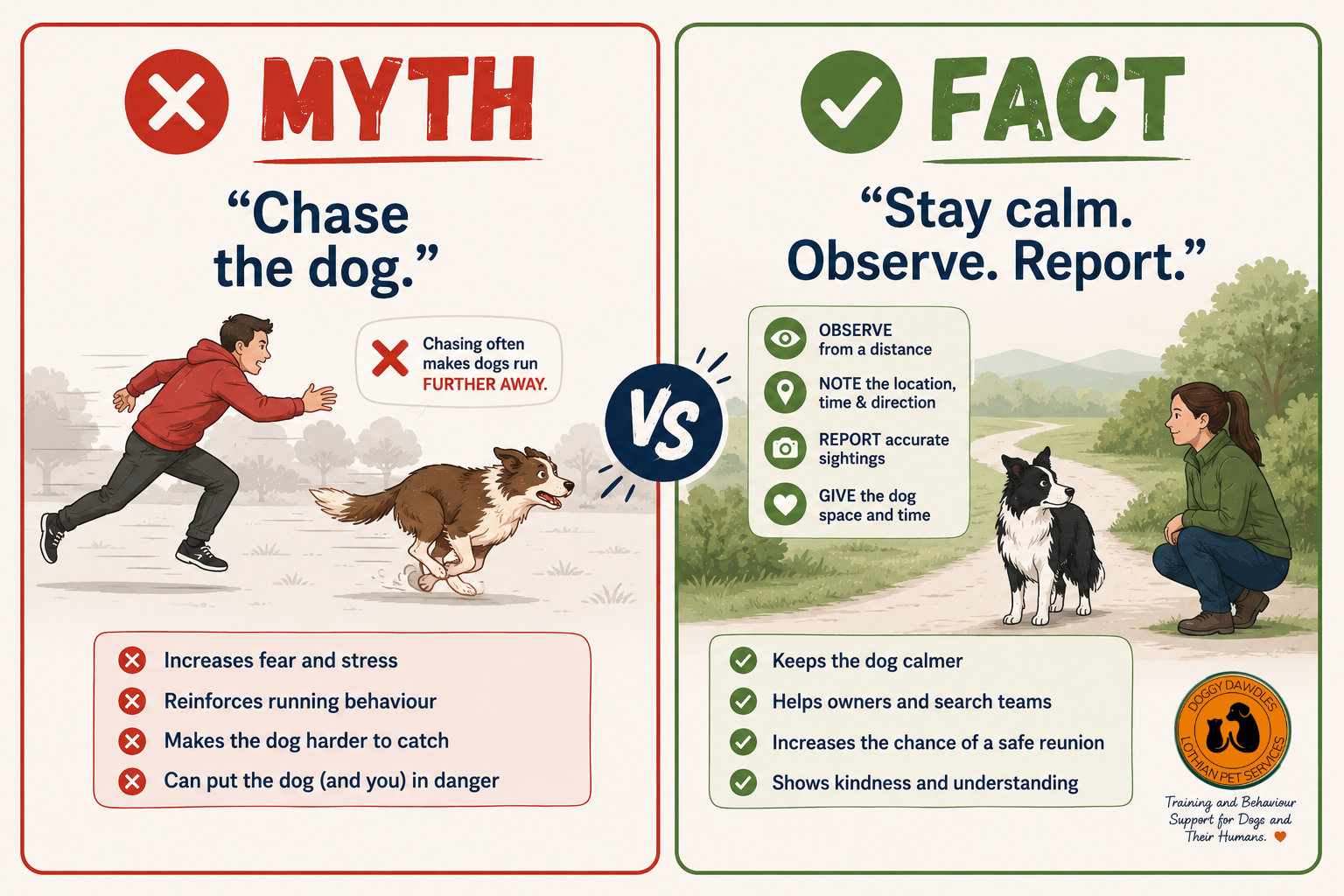
It’s a completely understandable reaction. We want to help. However, what many people don’t realise is that chasing a frightened dog is often what makes the situation worse.
Dogs don’t think the same way we do when they’re scared. A dog that is frightened, disoriented, or overwhelmed isn’t choosing to ignore people; they’re responding to powerful survival instincts that have evolved over thousands of years.
Understanding those instincts can dramatically improve the chances of a safe reunion.
This guide explains why dogs behave the way they do when they’re loose, what to do when you see a Loose or lost dog, and how members of the public can make a real difference when every minute counts.
Why Dogs Become Loose
Not every loose dog has escaped because they’re poorly trained. Many dogs become separated from their owners because of everyday accidents, including:
- A gate accidentally left open.
- A collar or harness slipping off.
- A lead clip failing.
- Being startled by fireworks or loud noises.
- Running after wildlife.
- Becoming frightened by another dog.
- Escaping during a road traffic collision.
- Becoming disorientated in unfamiliar surroundings.
- Slipping away while travelling.
Even experienced owners can find themselves in this situation. A loose dog doesn’t automatically indicate irresponsible ownership. Sometimes, despite careful planning, accidents happen.
Understanding Flight Mode
One of the biggest misunderstandings surrounding loose dogs is assuming they will behave normally. In reality, many frightened dogs enter what behaviour professionals describe as flight mode.
When the brain detects danger, survival becomes the priority.
Stress hormones such as adrenaline prepare the body to move quickly and escape perceived threats. During this time, dogs often:
- Ignore familiar voices.
- Fail to respond to recall.
- Avoid eye contact.
- Continue moving even when tired.
- Avoid approaching familiar people.
Owners are often heartbroken when their normally affectionate dog runs away from them.
The dog isn’t rejecting them. Their brain is simply prioritising survival over social interaction.
Why Chasing Usually Makes Things Worse
Imagine someone unexpectedly sprinting towards you while shouting. Your natural reaction would probably be to move away. Dogs experience a similar instinct. Chasing a loose dog often:
- Increases fear.
- Reinforces fleeing behaviour.
- Pushes the dog further from home.
- Encourages them to cross busy roads.
- Makes them more difficult to recover.
Well-meaning people can unintentionally create a chain reaction where the dog continues moving from one area to another, becoming increasingly difficult for owners and volunteers to predict.
Sometimes, the kindest thing you can do is stay where you are.
What To Do Instead
If you see a loose dog:
Stay calm
Dogs are highly sensitive to body language and movement. Avoid sudden gestures or rushing towards them.
Observe
Watch where the dog goes.
Are they walking? Running? Stopping? Looking behind them?
These observations help owners understand the dog’s behaviour.
Record Details
If safe to do so, note:
- Exact location. (we recommend What3words)
- Time.
- Direction of travel.
- Description of the dog.
- Collar, lead or harness.
- Behaviour.
Accurate information is incredibly valuable.
Report Quickly
Contact:
- The owner (if known).
- Local lost dog groups (the more info, the better, and photos of the dog are great too if you can get them)
- Dog wardens where appropriate. Depending on where the dog is, you may also need to phone the police, especially if it is on or near a major road and traffic is being affected.
Provide factual information rather than assumptions.
Give the Dog Space
Space often allows frightened dogs to slow down. A dog that feels trapped is more likely to continue running.
Common Mistakes
Avoid:
❌ Chasing.
❌ Cornering.
❌ Surrounding the dog.
❌ Driving after them.
❌ Posting outdated sightings without timestamps.
❌ Assuming someone else has already reported the sighting.
Why Accurate Sightings Matter
Owners don’t simply want to know that someone saw their dog.
They need to know:
- Where.
- When.
- Which direction.
Patterns begin to emerge. Those patterns often allow experienced volunteers to predict likely movement and concentrate search efforts.
One accurate sighting can save hours of searching.
If You Can Approach Safely
Sometimes dogs do stop. If they appear relaxed:
- Crouch sideways rather than facing them directly.
- Avoid staring.
- Speak quietly.
- Allow the dog to approach you.
Never force contact.
Never grab suddenly.
If the dog chooses not to approach, continue observing from a distance.
Helping the Owner
Losing a dog is one of the most stressful experiences an owner can face. You can help by:
- Remaining calm.
- Sharing accurate information.
- Avoiding rumours.
- Respecting the owner’s wishes.
- Following instructions from those coordinating the search.
Kindness goes a long way.
Prevention Starts Before a Dog Goes Missing
Owners can reduce risk by:
- Checking harnesses fit regularly.
- Keeping ID tags up to date. (and they are actually on the collar/harness!)
- Ensuring microchip details are current. (Best to check this yearly)
- Using appropriate equipment.
- Training reliable recall where possible.
- Taking extra care in unfamiliar environments.
No prevention plan is perfect, but preparation greatly improves safety.
Frequently Asked Questions
In most cases, no. Chasing often causes frightened dogs to run further away.
If there is an immediate risk to life, prioritise human safety while contacting the appropriate emergency services or authorities. Avoid placing yourself in danger.
Only if you know the dog and they appear calm enough to respond. Repeated shouting is generally unhelpful.
Only if it is safe to do so and without approaching or cornering the dog. Allow the dog to make the decision to come closer.
In the first instance, put up a post on your local Facebook groups.
If the dog is on or near a main busy road, call the police on 101 (or 999 if causing an immediate hazard).
You can also report the dog as lost to the local Dog Warden.
Key Takeaways
✔ Most people genuinely want to help.
✔ Understanding canine behaviour leads to better outcomes.
✔ Chasing usually makes frightened dogs run further.
✔ Calm observations are more valuable than dramatic rescues.
✔ Accurate sightings help owners reunite with their dogs.
✔ Every member of the community can play a role in bringing a lost dog home safely.
Final Thoughts
When we see a loose dog, our natural instinct is to act quickly.
But sometimes the best action is the calmest one.
By understanding how fear affects behaviour, resisting the urge to chase and providing accurate information instead, we can all improve the chances of a safe reunion.
Helping a dog home isn’t always about catching them.
Sometimes it’s about giving them the space they need, sharing the right information at the right time and allowing experienced owners or recovery teams to do what they do best.
Because every calm decision could be the reason a dog finds their way back to the people who love them.
About Doggy Dawdles
At Doggy Dawdles, I provide professional dog walking, pet sitting, dog training and Wedding Dog Chaperone services across East Lothian and the surrounding areas. My approach is simple: every dog is an individual, and their welfare always comes first.
If you’d like to find out more about any of my services, or simply have a question about your dog’s care, I’d love to hear from you.
Because professional pet care is about much more than just walking dogs.
Suggested Internal Links
- Found a Loose Dog? The Do’s and Don’ts That Could Save Its Life
- Helping Prevent Lost Dogs: Practical Steps Every Owner Should Take
- Understanding Canine Behaviour: Why Dogs Do What They Do
Learn more about canine flight mode.
Read our guide to preventing dogs from going missing.
Find out what to do if your own dog goes missing.
References
- American Veterinary Society of Animal Behavior (AVSAB). (2021). Position Statements and Resources.
- Horwitz, D. & Mills, D. (2022). BSAVA Manual of Canine and Feline Behavioural Medicine.
- Overall, K.L. (2013). Manual of Clinical Behavioral Medicine for Dogs and Cats.
- Rooney, N.J. & Cowan, S. (2011). Training methods and dog welfare. Journal of Veterinary Behavior.
- Yin, S. (2009). Low Stress Handling, Restraint and Behaviour Modification of Dogs & Cats.
Sign up for Newsletters which include relevant doggy info and important updates from Doggy Dawdles.
No responses yet