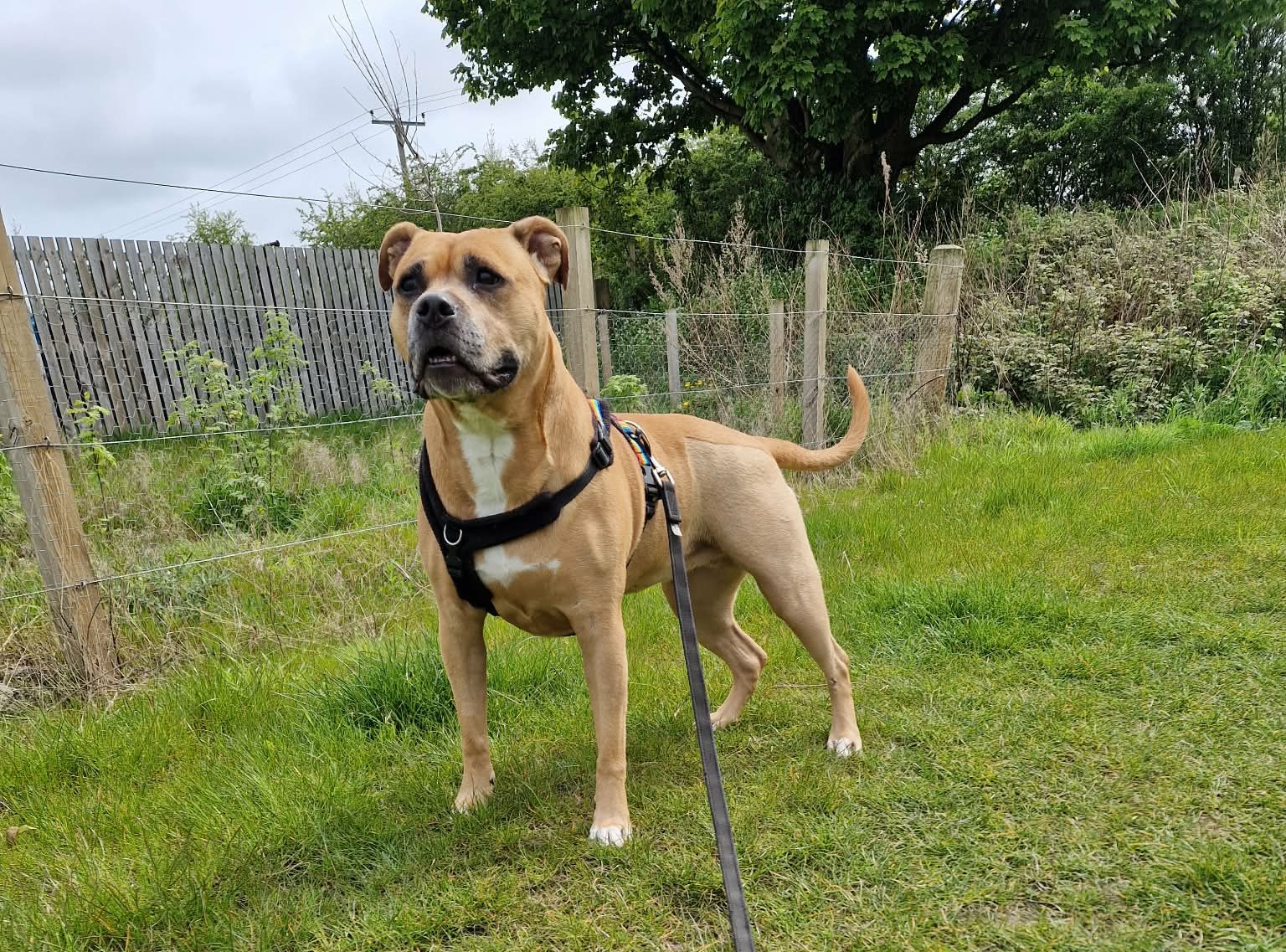
When a serious dog attack makes the news, the same questions almost always follow.
Should certain breeds be banned?
Are some dogs simply born dangerous?
Would stricter legislation prevent these incidents from happening again?
These are understandable questions, particularly when someone has been seriously injured. Public safety should always be a priority, and nobody wants to see preventable incidents involving people or dogs.
However, the answers are rarely as straightforward as newspaper headlines or social media discussions suggest.
Dog behaviour is influenced by genetics, health, early experiences, learning, environment, management and countless day-to-day interactions. Looking at just one of those factors rarely gives us the full picture.
This is particularly relevant when discussing Breed Specific Legislation (BSL) and dogs such as the XL Bully.
Over recent years, XL Bullies have become the focus of intense public debate throughout the UK. New legal restrictions have been introduced, opinions have become increasingly polarised, and it can sometimes feel as though every conversation has to choose one of two positions:
- Breed is everything.
- Breed means nothing.
The evidence suggests the reality lies somewhere in the middle.
Understanding that middle ground is important, not just for professionals working with dogs, but for anyone who owns one.
Why This Matters
The purpose of legislation surrounding dangerous dogs is simple: to reduce serious injuries and protect both people and animals.
That is an objective most people would support.
The challenge is deciding how to achieve it.
Current UK legislation focuses heavily on identifying specific breeds or “types” considered to pose a greater risk to public safety. While there is understandable logic behind considering a dog’s size and physical capability, legislation based primarily on appearance raises an important question:
Does a dog’s breed reliably predict whether that individual dog is likely to become dangerous?
It is an important distinction.
Predicting how much damage a dog could cause is not the same as predicting whether that dog is likely to bite at all.
A large, powerful dog clearly has the potential to inflict more severe injuries than a much smaller dog. Ignoring physical capability would be unrealistic.
At the same time, physical capability alone tells us very little about an individual dog’s temperament, emotional state or behavioural history.
Risk is about far more than size.
Understanding Breed Specific Legislation
Breed Specific Legislation refers to laws that regulate or prohibit particular breeds or “types” of dog because they are believed to present a greater risk to public safety.
In the UK, this legislation is primarily governed by the Dangerous Dogs Act 1991, which prohibits ownership of several specified types unless strict legal requirements are met.
These currently include:
- Pit Bull Terrier
- Japanese Tosa
- Dogo Argentino
- Fila Brasileiro
- XL Bully
Recent updates in Scotland have introduced additional requirements for owners of exempt prohibited dogs, including rules relating to the supervision of children under the age of 12 within private settings.
These changes are intended to reduce the risk of serious incidents involving vulnerable members of the public.
For owners of affected dogs, understanding and complying with these legal requirements is essential.
However, legislation is only one part of the wider conversation.
Whether a law exists or not, responsible ownership, appropriate training, good management and an honest assessment of a dog’s behaviour remain the foundations of keeping both people and dogs safe.
Looking Beyond Headlines
Discussions about dangerous dogs often become emotionally charged.
When serious incidents occur, there is a natural desire to find a clear explanation.
Unfortunately, behaviour science rarely provides simple answers.
A dog’s breed is only one piece of a much larger puzzle.
Health, pain, early socialisation, learning history, environmental management, previous experiences, emotional wellbeing and owner knowledge all influence how a dog responds to the world around it.
This does not mean breed is irrelevant.
Nor does it mean breed alone explains behaviour.
Both extremes overlook the complexity of canine behaviour.
One of the challenges in modern discussions is that scientific findings are often reduced to short headlines or repeated online without important context. Terms become widely accepted despite limited supporting evidence, while nuanced research is replaced by confident statements that sound convincing but do not always reflect what the science actually shows.
Understanding risk requires us to slow down, examine the evidence carefully and accept that several things can be true at the same time.
Breed Matters… But Not in the Way Many People Think
One of the biggest misunderstandings surrounding Breed Specific Legislation is the belief that acknowledging breed differences automatically means believing individual dogs are predictable.
That simply is not what behaviour science tells us.
Selective breeding has shaped dogs for hundreds of years.
Border Collies were developed to gather livestock.
Pointers were developed to locate game.
Retrievers were selected for their willingness to carry objects gently.
Terriers were bred for determination and persistence when working underground.
These behavioural tendencies are well recognised and remain visible in many dogs today, even those living purely as family pets.
Recognising these inherited tendencies is not controversial.
Where discussions become more complicated is when we move from working behaviours to behaviours associated with conflict, defence or aggression.
History and genetics can influence behavioural predispositions.
They cannot predict the behaviour of an individual dog.
That distinction is central to understanding both canine behaviour and effective risk assessment.
A dog’s breed may help us ask better questions.
It should never be treated as providing all the answers.
Genetics, Environment and Individual Behaviour
One of the biggest challenges when discussing dangerous dogs is that conversations often become polarised.
On one side are those who argue that breed determines everything.
On the other are those who insist that breed tells us nothing at all.
Like many topics in animal behaviour, the evidence suggests that neither position fully reflects reality.
The behaviour of every dog is shaped by a combination of genetics, early development, learning, health, environment and life experiences. These factors interact throughout the dog’s lifetime, making behaviour far more complex than a simple question of breed.
Understanding that complexity is one of the most important steps towards assessing risk accurately.
Genetics Influence Behaviour
It should not be controversial to say that genetics matter.
Selective breeding has produced hundreds of dog breeds with distinct physical and behavioural characteristics.
Border Collies have been selected for their ability to control the movement of livestock.
Labradors were bred to retrieve game willingly and cooperatively.
Pointers naturally locate and indicate game.
Terriers were developed to work independently with determination and persistence.
These characteristics are not taught from scratch.
They are behavioural predispositions that have been strengthened over many generations through selective breeding.
This does not mean every Border Collie wants to herd sheep or every Labrador loves retrieving, but it does mean these behaviours are more likely to emerge than they would in many other breeds.
Behavioural genetics is therefore a genuine and well-established part of canine science.
Ignoring it would be just as misleading as assuming genetics determine everything.
Behaviour Is More Than Genetics
While genetics provide the foundation, they are only one part of the story.
Every dog’s behaviour is influenced by numerous interacting factors, including:
- Early socialisation
- Learning experiences
- Training methods
- Physical health
- Pain or illness
- Emotional wellbeing
- Daily management
- Nutrition
- Sleep quality
- Environmental stress
- Previous experiences
- The behaviour of the people around them
Each experience changes how a dog responds to the world.
This is why behaviour is often described as the result of nature and nurture working together rather than competing against one another.
A genetically confident puppy raised in a stressful or unpredictable environment may develop very differently from a puppy with similar genetics raised in a calm, supportive home.
Likewise, two littermates can grow into remarkably different adults despite sharing much of the same genetic makeup.
Individual Dogs Matter More Than Breed Labels
Perhaps the most important finding from modern behavioural research is that variation between individual dogs is often greater than variation between breeds.
In other words, two dogs of exactly the same breed may differ more from one another than either differs from dogs belonging to another breed.
This is particularly important when discussing legislation.
Breed categories may provide information about physical characteristics or historical selection pressures, but they cannot reliably predict how an individual dog standing in front of you will behave.
For professionals assessing behaviour, the individual dog must always come first.
Breed may help shape the questions we ask.
It should never be treated as providing all the answers.
Behavioural Predispositions Are Not Behavioural Certainties
Predisposition is one of the most misunderstood concepts in dog behaviour.
A predisposition simply means a dog may be more likely to display certain behaviours under particular circumstances.
It does not mean those behaviours are inevitable.
For example, many Border Collies show a natural tendency to stalk moving objects.
That does not mean every Border Collie will herd children, cyclists or cars.
Similarly, a breed historically selected for guarding may be more likely to show behaviours associated with territoriality or suspicion of strangers.
Whether those tendencies are expressed depends on many other factors, including genetics, learning history, management, health and the dog’s individual temperament.
Understanding predispositions allows owners and professionals to prepare appropriately without making assumptions about the individual dog.
What Does This Mean for XL Bullies?
This is where discussions often become particularly emotional.
Like many modern breeds, the XL Bully has a complex breeding history.
Unlike some traditional working breeds, its development has involved multiple ancestral breeds and considerable variation between breeding lines.
It would therefore be inaccurate to suggest that every XL Bully has been selected for exactly the same behavioural purpose.
However, it would be equally inaccurate to suggest that historical selection plays no role whatsoever.
Physical capability, size, strength and aspects of breed history may all contribute to the overall picture when assessing risk.
None of these factors, however, allow us to predict the behaviour of an individual dog with certainty.
That is why responsible behavioural assessment looks beyond breed labels and considers the whole dog.
The “Uninhibited Bite” Myth
During discussions about XL Bullies, one phrase appears repeatedly online:
“They have an uninhibited bite.”
It is often presented as though it were an accepted scientific fact.
The evidence does not support that conclusion.
While the words have occasionally appeared descriptively within older discussions of canine behaviour, there is currently no recognised scientific classification describing XL Bullies—or any other breed—as possessing a unique “uninhibited bite.”
Repeating the phrase may sound convincing, but that is not the same as it being supported by evidence.
Understanding this distinction is important.
Science relies on clearly defined terminology.
When phrases become popular through repetition rather than evidence, they can quickly become accepted as fact despite having little scientific foundation.
As professionals, and as responsible dog owners, it is worth asking an important question before repeating any widely shared claim:
Where did this information come from, and does the evidence actually support it?
Understanding Bite Inhibition
Although the phrase “uninhibited bite” is misleading, bite inhibition is a genuine concept within canine behaviour.
Puppies naturally explore the world using their mouths.
During play with littermates, they learn that biting too hard has consequences.
A puppy that bites excessively may lose access to play, prompting it to moderate the pressure it uses during future interactions.
This process helps many puppies develop greater control over the force of their mouths.
However, bite inhibition is often oversimplified.
Learning to play gently as a puppy does not guarantee that a dog will show the same level of restraint when frightened, injured, in pain or experiencing intense emotional arousal.
Research suggests that inhibitory control is highly dependent on context.
A dog capable of remarkable self-control during relaxed social interactions may respond very differently during situations involving fear, conflict or predatory behaviour.
For that reason, bite inhibition should never be viewed as a simple “yes or no” characteristic.
Like behaviour itself, it exists within a much more complex system influenced by genetics, learning, health, emotions and the immediate environment.
Why This Matters
One of the recurring themes throughout this article is that behaviour rarely has simple explanations.
Just as it would be incorrect to dismiss genetics entirely, it would also be incorrect to assume that genetics alone determine behaviour.
Both positions ignore the evidence.
The more we learn about canine behaviour, the clearer it becomes that understanding risk requires us to look at the individual dog as a whole.
Breed.
Health.
Learning.
Environment.
Management.
Emotional wellbeing.
Past experiences.
Current circumstances.
Each contributes part of the picture.
Only by considering all of these factors together can we begin to understand why one dog may pose very little risk while another, sometimes of the very same breed, may require careful management and support.
Assessing Risk: Looking Beyond Breed Labels
Understanding that behaviour is influenced by many different factors naturally leads to another important question.
How should risk actually be assessed?
If breed alone cannot reliably predict behaviour, what should owners, trainers and behaviour professionals be looking at instead?
Modern behavioural assessment does not rely on a single characteristic.
Instead, it builds a picture of the individual dog by considering a range of factors that may increase or reduce the likelihood of an incident occurring.
Importantly, assessing risk is not about deciding whether a dog is “good” or “bad.”
It is about identifying situations where things could go wrong and putting sensible measures in place to reduce that risk before an incident occurs.
This proactive approach benefits everyone involved – owners, professionals, the wider public and, perhaps most importantly, the dog itself.
Risk Is More Than the Chance of a Bite
One of the biggest misconceptions surrounding dangerous dogs is that risk is simply the likelihood of being bitten.
In reality, risk has two important components:
- The likelihood of an incident occurring.
- The potential consequences if it does occur.
These are not the same thing.
For example, a small dog that frequently snaps at strangers may have a relatively high likelihood of biting, but the physical consequences of that bite are often limited.
Conversely, a large, powerful dog may have an extremely low likelihood of biting, yet if it did, the injuries could be considerably more severe.
Both situations involve risk.
They are simply different kinds of risk.
This distinction is fundamental to understanding why physical capability should not be ignored, while also recognising that capability alone cannot predict behaviour.
Physical Capability Matters
Discussions about Breed Specific Legislation sometimes become so focused on behaviour that they unintentionally dismiss the importance of physical capability.
That would be a mistake.
Size, strength and jaw power all influence the severity of injuries a dog may be capable of causing.
These factors are entirely reasonable considerations when assessing potential consequences.
Acknowledging this is not the same as suggesting a particular breed is inherently dangerous.
Instead, it reflects the practical reality that larger dogs generally possess a greater capacity to inflict serious injuries than much smaller dogs.
Professionals working with dogs routinely take physical capability into account when assessing handling strategies, equipment, management plans and public safety.
It is simply one part of the wider picture.
Behavioural Likelihood Matters Too
While physical capability affects potential severity, behaviour determines whether that capability is ever used.
A dog’s behavioural history often provides far more useful information than its breed alone.
Questions that may be considered include:
- Has the dog previously bitten or attempted to bite?
- Under what circumstances did those incidents occur?
- Were warning signals shown beforehand?
- Is the behaviour predictable?
- Are there identifiable triggers?
- How quickly does the dog recover after becoming aroused?
- Does the dog respond well to management and training?
- Could pain, illness or another medical condition be contributing?
Looking at these questions provides a far richer understanding of risk than simply identifying a breed.
No responsible behaviour professional would expect to assess a dog accurately without gathering this wider information.
Health Should Never Be Overlooked
Behaviour does not exist in isolation from physical health.
Pain, illness and underlying medical conditions can all influence how a dog behaves.
Conditions affecting joints, the spine, ears, teeth or internal organs may cause discomfort that increases irritability or reduces a dog’s tolerance for handling.
Hormonal disorders, neurological disease and cognitive decline may also alter behaviour.
For this reason, behaviour professionals frequently recommend veterinary assessment whenever behaviour changes suddenly or appears inconsistent with the dog’s previous history.
Treating behaviour without considering health risks overlooking an important part of the picture.
Environment Shapes Behaviour Every Day
Risk is also influenced by the environment in which a dog lives.
A calm household with predictable routines, appropriate enrichment and thoughtful management presents very different challenges from a busy home where the dog is constantly exposed to stress, conflict or situations it struggles to cope with.
Children, visitors, other pets, access to resources, exercise, sleep, noise and routine all contribute to how a dog experiences its daily life.
Behaviour cannot be separated from the environment in which it occurs.
Changing the environment is often one of the simplest and most effective ways of reducing risk.
What Does the Evidence Suggest About Breed Specific Legislation?
Breed Specific Legislation has existed in various forms around the world for several decades.
This raises an important question.
Has it achieved its intended aim of reducing serious dog bite incidents?
The answer is less straightforward than many people expect.
Research examining Breed Specific Legislation across different countries has produced mixed findings.
Some studies have reported little or no measurable reduction in overall dog bite numbers following the introduction of breed-specific laws.
Others have found limited effects within particular regions or time periods.
Interpreting these studies is challenging because dog bite statistics are influenced by many different factors, including:
- Changes in dog ownership.
- Differences in reporting practices.
- Healthcare recording systems.
- Breed identification.
- Population demographics.
- Public awareness.
- Local enforcement.
As a result, it is difficult to attribute changes in bite numbers solely to legislation targeting particular breeds.
What does emerge consistently from the literature is that serious incidents involve many different breeds, crossbreeds and mixed-breed dogs.
This is perhaps unsurprising.
Prohibited breeds make up only a small proportion of the UK’s overall dog population.
From a population perspective, many incidents will inevitably involve dogs outside prohibited categories simply because those dogs are far more common.
This does not prove that breed is irrelevant.
Nor does it prove Breed Specific Legislation can never contribute to public safety.
It does suggest, however, that legislation focusing primarily on appearance is unlikely to address every factor that contributes to serious incidents.
Is There A Better Way?
If the aim is to reduce dog bites and improve public safety, it is reasonable to ask whether additional approaches should sit alongside existing legislation.
Many professionals have suggested that greater emphasis should be placed on responsible ownership, education and early intervention.
This might include measures such as:
- Improved owner education.
- Greater access to behaviour support.
- Earlier identification of dogs showing concerning behaviour.
- Better public understanding of canine body language.
- Stronger promotion of positive training methods.
- Clearer guidance around management and supervision.
- Appropriate breeding practices.
- Improved enforcement of existing animal welfare legislation.
Whether future legal frameworks should include compulsory education, competency assessments or licensing remains a matter of public and political debate.
Reasonable people will hold different views.
What seems difficult to dispute, however, is that reducing dog bite incidents requires more than simply identifying a dog’s breed.
Preventing incidents begins long before a bite occurs.
It starts with informed owners, appropriate management and recognising when a dog may need support.
Responsible Ownership Is the Foundation
Regardless of legislation, every dog owner shares responsibility for reducing risk.
Responsible ownership is not about expecting perfection.
It is about recognising a dog’s individual needs, understanding its behaviour and taking reasonable steps to keep everyone safe.
That might involve:
- Seeking professional support early.
- Providing appropriate physical and mental enrichment.
- Managing situations the dog finds difficult.
- Teaching children how to interact safely with dogs.
- Using equipment such as basket muzzles positively when appropriate.
- Ensuring dogs receive regular veterinary care.
- Continuing training throughout the dog’s life.
These measures benefit dogs of every breed.
More importantly, they address the factors that behaviour science tells us genuinely influence risk.
🐾 Doggy Dawdles Take
If there is one message to take from the evidence so far, it is this:
Risk cannot be identified by appearance alone.
Breed can help us understand a dog’s history, physical capability and possible behavioural predispositions.
But effective risk assessment looks much further.
It considers the individual dog’s behaviour, health, environment, learning history and the people responsible for its care.
When we focus on the whole picture rather than a single characteristic, we place ourselves in a much stronger position to prevent incidents before they happen.
Putting the Evidence into Practice
Understanding the science behind canine behaviour is only part of the picture.
The next step is asking a simple question:
What can we actually do with this information?
Whether you own a Chihuahua, a Border Collie, an XL Bully or a mixed-breed rescue, the principles of responsible ownership remain remarkably similar.
Risk assessment is not about assuming the worst.
It is about understanding the dog in front of you, recognising potential risks before they become problems and putting sensible management strategies in place to protect both people and dogs.
For professionals, this means carrying out evidence-based behavioural assessments rather than relying on assumptions.
For owners, it means recognising that training, management and welfare are ongoing responsibilities rather than one-off tasks.
The Recent Scottish Changes
Recent changes to Scottish legislation relating to exempt XL Bullies highlight why responsible management remains so important.
From 1 November 2026, owners of exempt prohibited dogs must ensure that children under the age of 12 are not left unsupervised with their dog in private settings, including the family home and garden.
This requirement sits alongside the existing conditions attached to Certificates of Exemption, including requirements relating to microchipping, neutering, secure containment, public muzzling and keeping the dog on a lead in public.
For affected owners, understanding these legal responsibilities is essential.
However, the principles behind them apply much more widely.
Regardless of breed, young children should never be left unsupervised with any dog.
Children and dogs can build wonderful relationships, but they both deserve appropriate guidance, supervision and opportunities to interact safely.
Good management is not about mistrusting the dog.
It is about recognising that accidents can happen when adults assume that “it’ll be fine.”
Management Is Not Failure
One of the biggest misconceptions in dog training is that management somehow represents failure.
In reality, good management is one of the most effective behaviour tools available.
Baby gates.
Leads.
Long lines.
Basket muzzles.
Separate feeding areas.
Quiet resting spaces.
Thoughtful routines.
These are not admissions that a dog is dangerous.
They are practical ways of preventing situations from becoming difficult in the first place.
The most successful owners rarely rely on training alone.
Instead, they combine training with sensible management that allows their dog to succeed.
Professionals do exactly the same.
Muzzles Deserve Better Recognition
Few pieces of equipment generate as much misunderstanding as the basket muzzle.
Unfortunately, many people still associate muzzles with dangerous dogs.
That perception could not be further from the truth.
A well-fitted basket muzzle is simply another management tool.
It allows dogs to pant, drink, take treats and enjoy walks while providing an additional layer of safety where appropriate.
Dogs may wear muzzles for many reasons, including:
- Veterinary treatment.
- Recovery after surgery.
- Scavenging prevention.
- Behaviour modification programmes.
- Legal requirements.
- Public confidence.
- Individual risk management.
When introduced gradually using positive reinforcement, most dogs learn to wear a basket muzzle comfortably and confidently.
The presence of a muzzle should never be viewed as evidence that a dog is aggressive.
In many cases, it demonstrates exactly the opposite – an owner who is taking their responsibilities seriously.
Education Prevents More Incidents Than Assumptions
Throughout this article, one theme has remained consistent.
Knowledge reduces risk.
The better owners understand canine behaviour, body language and welfare, the more likely they are to recognise concerns early and seek support before problems escalate.
Education helps owners:
- recognise subtle signs of stress;
- understand how learning influences behaviour;
- appreciate the importance of health and pain;
- manage difficult situations safely;
- make informed decisions about training and behaviour support.
Improving owner knowledge benefits every breed, every household and every community.
It is one of the few interventions capable of reducing risk before incidents occur.
Where Do We Go From Here?
Discussions surrounding Breed Specific Legislation are unlikely to disappear any time soon.
Strong opinions exist on every side of the debate.
Some believe legislation should become stricter.
Others believe it should be abolished entirely.
Behaviour science does not provide simple answers.
What it does provide is a growing body of evidence that encourages us to think beyond appearance alone.
Genetics matter.
Breed history matters.
Physical capability matters.
Health matters.
Learning matters.
Environment matters.
Management matters.
Owner knowledge matters.
Each contributes something to the overall picture.
None provides every answer on its own.
If the aim is to reduce serious dog bite incidents while improving dog welfare, then understanding the interaction between these factors is likely to achieve far more than focusing on any single one in isolation.
🐾 Doggy Dawdles Take
One of the things I love most about working with dogs is that no two are ever truly the same.
Even dogs from the same litter can develop into remarkably different individuals.
That is why labels alone can never replace thoughtful assessment.
As behaviour professionals, our responsibility is not to judge dogs by appearance or assumptions.
It is to understand the individual in front of us.
Likewise, as owners, our responsibility is not simply to comply with legislation.
It is to understand our dogs, meet their needs and manage them responsibly throughout their lives.
Protecting people and protecting dogs should never be viewed as competing priorities.
Done properly, they are exactly the same goal.
🐾 Key Takeaways
- Every dog has the potential to bite, regardless of breed.
- Breed history and genetics can influence behaviour, but they do not predict how an individual dog will behave.
- Effective risk assessment considers the whole dog, including health, behaviour, learning history, environment and physical capability.
- Responsible ownership, education and appropriate management remain the most effective ways of reducing risk.
- Protecting public safety and improving dog welfare should always go hand in hand.
📖 Continue Reading
You may also find these Knowledge Hub articles useful:
- Can Any Dog Bite? Understanding Bite Risk
- Why Dogs Bite: Understanding the Science Behind Aggression
- Breed vs Behaviour: Does Genetics Predict Personality?
- Understanding Bite Inhibition in Dogs
- Reading Canine Body Language Before Problems Escalate
- Children and Dogs: Building Safe Relationships
- Why Pain Can Change Behaviour
- Muzzle Training: A Positive Approach to Safety
- How Behaviour Professionals Assess Risk
- Responsible Dog Ownership in the UK
🔬 Evidence Statement
Evidence evolves.
Dog behaviour is a rapidly developing field of science. The information within this article reflects the best available evidence and accepted professional understanding at the time of writing. As new research emerges, our understanding may change, and this article will be reviewed and updated where appropriate.
References
Legislation & Government Guidance
Department for Environment, Food & Rural Affairs (DEFRA) (2024) XL Bully dog guidance. London: DEFRA.
Scientific Literature
1. Individual behavioural variation across breeds. Morrill, K. et al. (2022) Ancestry-inclusive dog genomics challenges popular breed stereotypes. Nature.
2. Breed legislation and behaviour. Casey, R.A. et al. (2014), Human directed aggression in domestic dogs (Canis familiaris): Occurrence in different contexts and risk factors. Applied Animal Behaviour Science.
3. Behavioural assessment of legislated breeds. Barnard, S. et al. (2012), Behavioral assessment of dogs from legislated and non-legislated breeds. Journal of Veterinary Behavior.
4. Inhibitory control and aggression. Bray, E.E. et al. Research on inhibitory control and behavioural regulation in dogs.
5. Aggression and inhibitory control. Rosado, B. et al. (2010). Blood concentrations of serotonin, cortisol and dehydroepiandrosterone in aggressive dogs. Applied Animal Behaviour Science.
6. Dog bites in children. Gilchrist, J., Sacks, J.J., White, D. & Kresnow, M. Dog bites: still a problem? Injury Prevention.
7. AVMA Literature Review. American Veterinary Medical Association. The Role of Breed in Dog Bite Risk and Prevention.
8. Position Statement. American Veterinary Society of Animal Behavior. Position Statements
9. Fear Free
10. RSPCA
11. BSAVA
12. Parker, H.G. et al. – Research into canine genetics.
13. Dogs Trust
14. PDSA PAW Report
Sign up for Newsletters which include relevant doggy info and important updates from Doggy Dawdles.
No responses yet