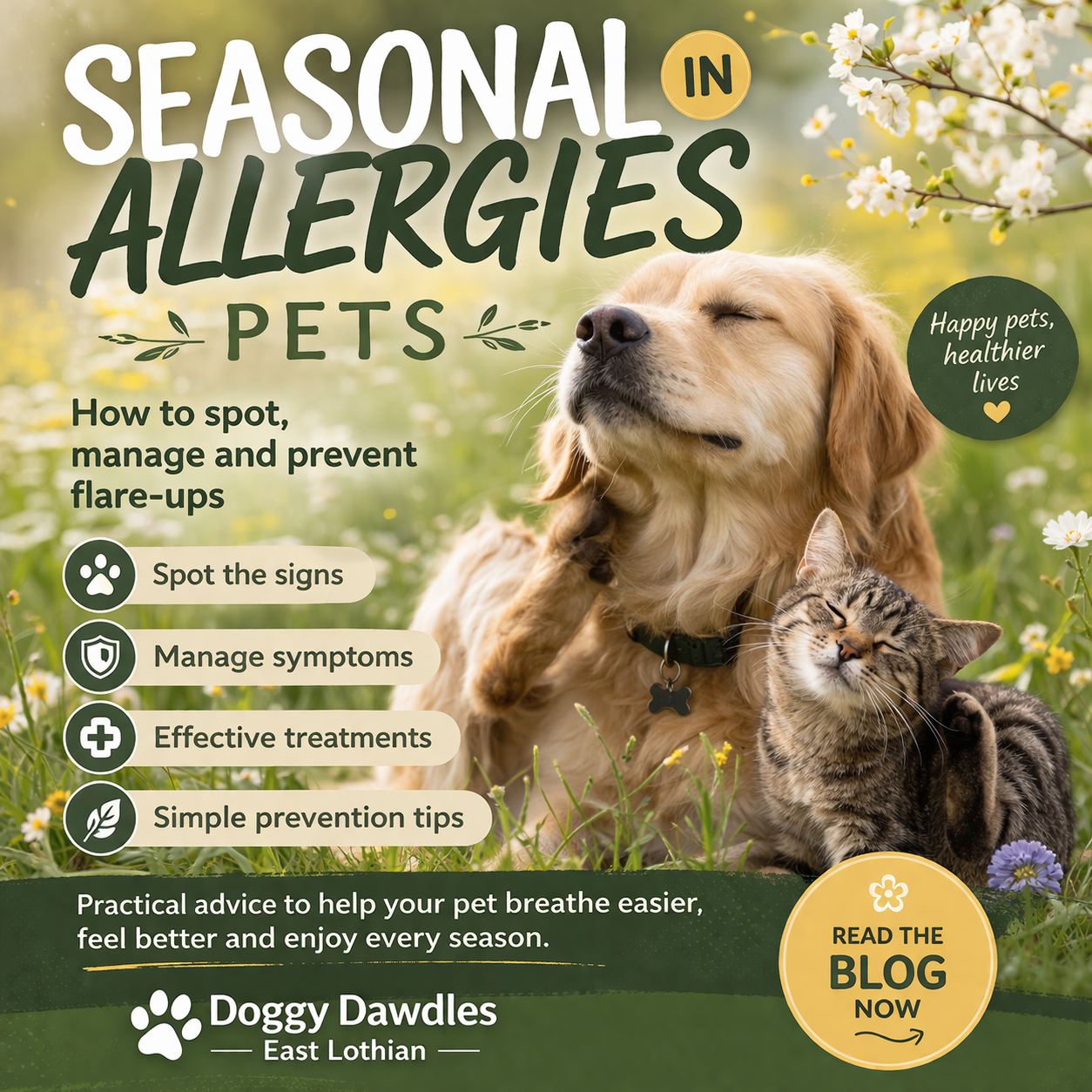
Seasonal Allergies in Pets: How to Spot Them, Manage Them, and Keep Your Pet Comfortable
As the seasons change and everything starts blooming again, many of us start reaching for antihistamines and tissues. But it’s not just humans who can struggle with seasonal allergies. Our pets can too.
At Doggy Dawdles East Lothian, I often see dogs become noticeably itchier or more uncomfortable at certain times of year, especially in spring and summer when pollen, grasses and environmental allergens are at their peak. Cats can be affected too, though their symptoms can sometimes be a little less obvious.
Seasonal allergies in pets can be frustrating for both animals and owners. They can affect sleep, behaviour, skin health, comfort, and overall wellbeing. The good news is that once you know what to look for, there are plenty of ways to help manage symptoms and reduce flare-ups.
If your dog or cat seems itchier than usual, this one’s worth reading.
What Are Seasonal Allergies in Pets?
Seasonal allergies happen when your pet’s immune system reacts to something in the environment that would normally be harmless. This might include:
- Tree pollen
- Grass pollen
- Weed pollen
- Mould spores
- Dust and environmental particles
- Certain plants or outdoor surfaces
These allergens tend to become more problematic during particular times of year, especially spring, summer and early autumn.
Unlike humans, who often show allergy symptoms through sneezing and runny noses, pets usually show it through their skin.
That’s why many owners don’t realise allergies could be the issue at first.
Common Signs of Seasonal Allergies in Dogs and Cats
Seasonal allergies can show up in a few different ways, and symptoms can range from mild irritation to quite significant discomfort.
Signs to watch for include:
- Itchy skin
- Excessive scratching
- Licking paws or chewing feet
- Red or inflamed skin
- Recurrent ear irritation or infections
- Watery eyes
- Sneezing
- Hair loss or thinning fur
- Rubbing face on furniture or carpets
- Restlessness or irritability
In dogs, allergies often show up around:
- Paws
- Ears
- Belly
- Armpits
- Face and muzzle
Cats may overgroom, scratch around the head and neck, or develop irritated patches of skin.
If symptoms seem to appear or worsen at the same time every year, seasonal allergies could well be playing a part.
Why Seasonal Allergies Matter More Than People Think
It’s easy to think of allergies as “just a bit of itching”, but for many pets they can have a real impact on quality of life.
Constant itching can lead to:
- Broken skin
- Hot spots
- Secondary infections
- Poor sleep
- Increased anxiety or frustration
- Behaviour changes
A pet who’s uncomfortable in their own skin can quickly become stressed, tired, and unsettled.
That’s why it’s so important to address symptoms early rather than hoping they’ll just pass.
How Seasonal Allergies Affect Behaviour
This is something I think often gets overlooked.
When a dog is itchy, uncomfortable, or dealing with sore paws and inflamed ears, they may not behave quite like themselves.
You might notice:
- More licking and chewing
- Less tolerance around handling
- Reduced patience on walks
- More restlessness at home
- Trouble settling
- Changes in mood or focus
It doesn’t mean your pet is being difficult. It usually means they’re uncomfortable.
As someone who works closely with animals every day, I always think it’s important to look at the whole picture. Behaviour and wellbeing are closely linked.
What Causes Flare-Ups?
Some pets are simply more prone to allergies than others, and once a pet has an allergic tendency, certain environmental triggers can make things worse.
Common flare-up triggers include:
- Long grass
- Flowering plants
- Warm, dry windy days
- Pollen collecting on fur and paws
- Dust brought in from outdoors
- Rolling in freshly cut grass
- Damp, mouldy outdoor areas
Even if the allergen itself can’t be fully avoided, understanding what tends to trigger symptoms can help you manage exposure more effectively.
How to Manage Seasonal Allergies in Pets
Managing allergies is often about reducing irritation, supporting the skin, and knowing when veterinary help is needed.
1. Rinse paws after walks
One of the easiest and most effective things you can do is gently wipe or rinse your dog’s paws and lower legs after being outside.
This helps remove:
- Pollen
- Grass residue
- Dust
- Environmental irritants
It can make a real difference, especially for dogs who lick or chew their feet after walks.
A simple lukewarm rinse or pet-safe paw wipe is often enough.
2. Keep bedding and blankets clean
Pollen and allergens can settle into soft furnishings surprisingly quickly.
Try washing:
- Dog beds
- Blankets
- Throws
- Soft toys
- Towels used after walks
Keeping these clean helps reduce your pet’s exposure indoors, where they should ideally be able to fully relax.
3. Brush coats regularly
Regular grooming can help remove allergens trapped in your pet’s fur.
This is especially useful for:
- Long-coated dogs
- Dogs who spend a lot of time in grass or woodland
- Cats who go outdoors
A quick brush after walks or garden time can help stop allergens being carried around the house and sitting against the skin for too long.
4. Avoid peak pollen times where possible
If your pet is particularly sensitive, it may help to walk earlier in the morning or later in the evening rather than during the warmest, driest part of the day when pollen levels tend to be higher.
This won’t eliminate the problem entirely, but it can help reduce exposure.
In East Lothian especially, windy days can carry a lot of pollen across open paths, coastal routes, and grassy areas, so route choice can make a difference too.
5. Keep grass short in your garden
If you have a garden your dog spends lots of time in, keeping grass trimmed can help reduce contact with pollen-heavy areas.
You could also create a lower-allergen toilet or rest area using:
- Gravel
- Bark
- Patio
- Short-cut lawn
This is especially useful for dogs who already struggle with itchy paws or bellies.
How Are Seasonal Allergies Treated?
If your pet’s symptoms are ongoing, worsening, or causing distress, it’s always best to speak to your vet.
Treatment will depend on:
- Severity of symptoms
- Skin condition
- Whether infections are present
- Your pet’s age, breed, and medical history
Your vet may recommend:
- Allergy medication
- Anti-itch treatment
- Medicated shampoos
- Ear treatment
- Skin support supplements
- Investigation into other underlying causes
It’s really important not to give human antihistamines or medication without veterinary guidance, even if they seem harmless. Some medications are unsafe for pets, and dosage matters enormously.
If your pet has persistent itching, sore ears, or inflamed skin, it’s always worth getting them checked properly.
Can Seasonal Allergies Be Prevented?
In many cases, allergies can’t be completely prevented, especially if your pet is already prone to them. But they can often be managed really well once you understand what helps.
Ways to reduce flare-ups include:
- Wiping paws after walks
- Regular grooming
- Keeping ears clean and monitored
- Avoiding known triggers
- Supporting skin health
- Acting early when symptoms begin
The earlier you spot the signs, the easier it usually is to keep things under control.
Seasonal Allergies and Walks: Should You Stop Going Out?
Usually, no — unless your vet advises otherwise.
Walks are still incredibly important for your dog’s:
- Mental stimulation
- Routine
- Exercise
- Emotional wellbeing
The key is not to stop walking altogether, but to walk smarter during flare-up periods.
That might mean:
- Shorter walks in lower pollen areas
- More shaded or coastal routes
- Rinsing off afterwards
- Avoiding very grassy fields
Dogs still need to get out and enjoy life, even if allergies are a challenge. It’s all about finding the balance between comfort and quality of life.
And if your dog is especially uncomfortable during allergy season, having someone who understands how to adapt walks thoughtfully can make a huge difference.
Helping Cats with Seasonal Allergies
Although dogs are often the first animals we think of when it comes to allergies, cats can absolutely be affected too.
Things that may help cats include:
- Wiping down coats gently if they go outdoors
- Washing bedding regularly
- Keeping on top of flea prevention
- Monitoring grooming habits and skin condition
- Reducing environmental stress
Cats are brilliant at hiding discomfort, so subtle changes like overgrooming, irritation around the face, or skin changes should never be ignored.
When to Seek Veterinary Advice
Please don’t wait too long if your pet is clearly uncomfortable.
It’s best to speak to your vet if:
- Scratching is persistent
- Skin is red, sore, or broken
- Ears are inflamed or smelly
- Your pet seems distressed
- Symptoms return every year
- There’s any sign of infection
The sooner allergies are properly assessed, the easier they usually are to manage.
Final Thoughts
Seasonal allergies can be miserable for pets, but with the right support, they absolutely can be managed.
The most important thing is to pay attention to the small signs. If your dog is chewing their paws more than usual, your cat is overgrooming, or something just feels a little “off”, it’s always worth listening to that instinct.
At Doggy Dawdles East Lothian, I’m always a big believer in noticing the little things. Our pets can’t tell us what’s wrong in words, but they do tell us in behaviour, body language, and routine changes.
And when we spot it early, we can make life a whole lot more comfortable for them.
Need support keeping your dog comfortable, active, and settled during allergy season?
Whether your pet needs calmer routes, thoughtful walks, or consistent care while you’re away, Doggy Dawdles East Lothian is here to help.
👉 Get in touch to find out more about dog walking, pet sitting, and tailored pet care.
This blog is a part of a blog circle so if you found this interesting and would like to find out more first aid stuff regarding pets click HERE
Sign up for Newsletters which include relevant doggy info and important updates from Doggy Dawdles.
No responses yet