What Does a Professional Dog Walker Really Do?
It’s About Much More Than Walking Dogs
When most people picture a dog walker, they imagine someone collecting a group of excited dogs, heading off to the woods or beach, throwing a few tennis balls, taking some photographs and bringing everyone home tired.
And yes, that is part of the job.
But it’s only a very small part.
In reality, professional dog walking starts long before a lead is clipped onto a collar and continues long after the last dog has been dropped safely back home.
For me, professional pet care has never been about simply exercising dogs. It’s about understanding them as individuals, recognising their needs, protecting their welfare and earning the trust that owners place in me every single day.
Every dog has their own personality.
Their own likes and dislikes.
Their own confidence levels.
Their own fears.
Their own way of communicating.
The best walks aren’t measured by miles covered or calories burned.
They’re measured by how each individual dog experiences that time outdoors.
Every Dog Is an Individual
One of the things I love most about my job is that no two dogs are ever the same.
Some dogs arrive bursting with excitement, desperate to explore every scent they can find.
Others need a slower start to build confidence.
Some thrive in social groups.
Others are happier on quieter walks with more space.
Some dogs love splashing through every puddle they can find.
Others would rather tiptoe around them.
As professionals, our job isn’t to make every dog fit the same routine.
Our job is to adapt to the dog in front of us.
That means constantly observing.
Watching body language.
Monitoring energy levels.
Recognising when a dog is becoming tired, overwhelmed or over-aroused.
Understanding when they need encouragement, when they need space and when they simply need time to sniff.
Those decisions happen naturally throughout every walk, often without owners ever realising how many are being made.
Walking Is Mental Exercise Too
One of the biggest misconceptions about dog walking is that dogs simply need physical exercise.
Of course movement is important.
But for many dogs, mental stimulation can be just as valuable.
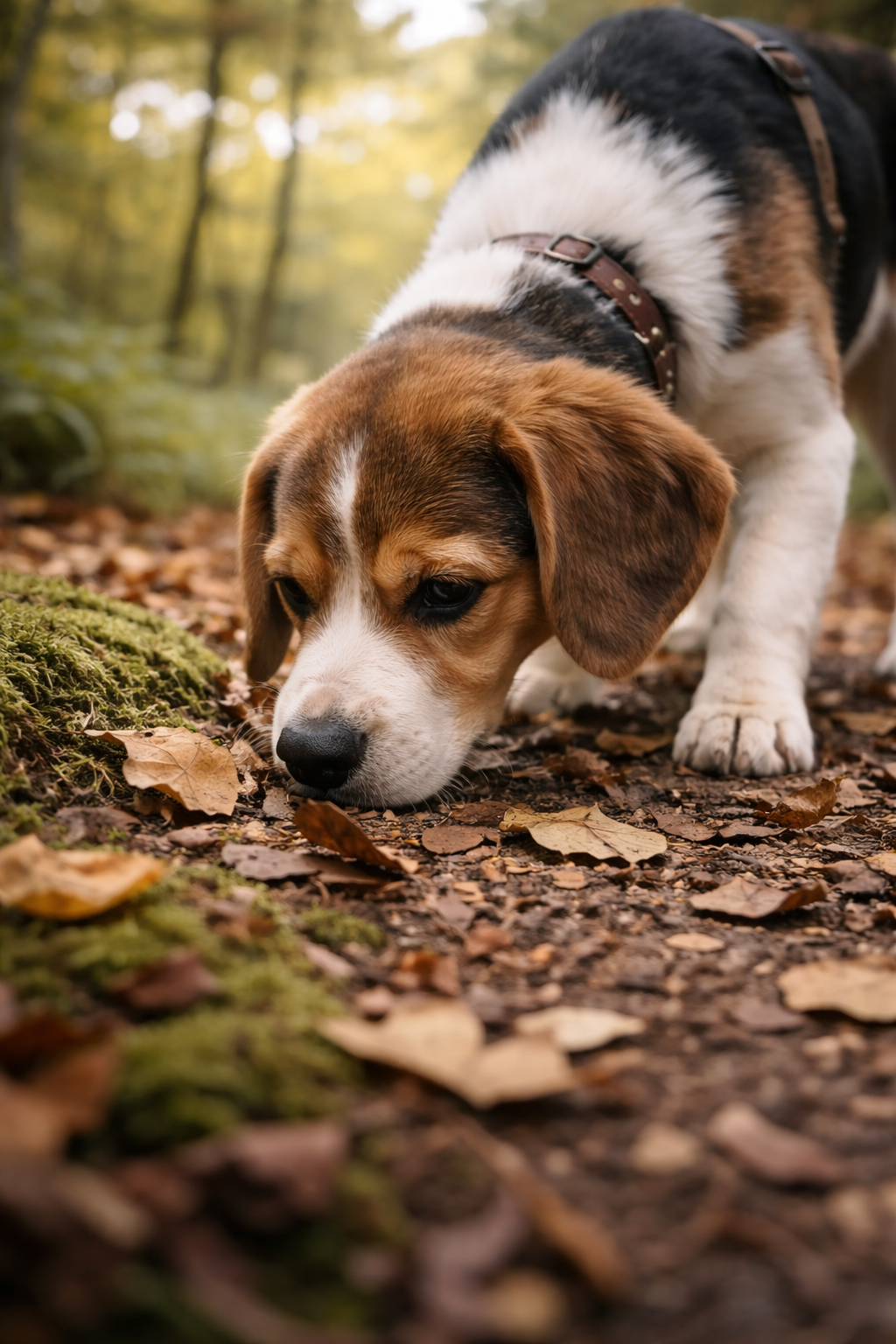
Allowing dogs to investigate scents, explore different environments and make choices about where they want to go gives their brains a workout too.
Sniffing isn’t a distraction from the walk.
For dogs, it is part of the walk.
Their noses tell them who has been there, what animals have passed through, how recently another dog visited and countless other pieces of information we can barely imagine.
Sometimes the best thing we can do is slow down and let dogs experience the world in the way nature intended.
A slower walk filled with sniffing opportunities can often leave a dog more settled and content than a fast-paced march around the block.
Reading What Dogs Are Telling Us
Dogs are communicating all the time.
Not with words, but through posture, movement, facial expressions and behaviour.
Professional dog walkers spend years learning to recognise these subtle signals.
A slight turn of the head.
Lip licking.
Yawning.
Changes in tail position.
Weight shifting.
Eye movement.
Small changes in pace.
Individually these signals may seem insignificant.
Together they tell a story.
They can indicate excitement, uncertainty, stress, curiosity, relaxation or frustration.
Recognising these early allows us to make good decisions before situations escalate.
Perhaps that means giving another dog more space.
Perhaps it means changing direction.
Perhaps it means allowing the dog a quiet moment to decompress.
Good dog walking isn’t about controlling dogs.
It’s about understanding them.
Welfare Always Comes First to your Professional Dog Walker
One of the questions I’m sometimes asked is whether I ever cancel walks.
The answer is yes.
Because dog welfare always comes before sticking rigidly to a schedule.
There are days when temperatures become unsafe.
Days when severe weather makes certain locations unsuitable.
Days when an individual dog isn’t feeling themselves.
Being professional sometimes means making the decision not to walk.
Instead, that time might be replaced with enrichment, a shorter outing, a toilet break or a calm visit at home.
The goal isn’t simply to tire dogs out.
The goal is to meet their needs safely and responsibly.
That’s a very different mindset from believing every dog needs the same amount of exercise every day.
Quality of care will always be more important than quantity of miles.
Why Qualifications Matter
People often ask whether qualifications really matter in dog walking.
The simple answer is yes, but perhaps not for the reason you might think.
A certificate on the wall doesn’t automatically make someone a great dog professional. Experience, observation, empathy and good judgement all play an equally important role.
However, qualifications demonstrate a commitment to learning. They show that someone has invested time in understanding canine behaviour, welfare, health, body language, learning theory and safe handling techniques. They provide a strong foundation that can then be built upon through practical experience.
The world of animal welfare is constantly evolving. New research is published every year, our understanding of canine behaviour continues to grow, and best practice develops alongside it. What was considered normal twenty years ago may no longer reflect the highest standards of welfare today.
That’s why I believe learning should never stop.
Continuing Professional Development (CPD) allows me to keep improving my knowledge and refine the way I work. Every course, webinar, workshop or book adds another piece to the puzzle, helping me provide the best possible care for every dog I meet.
Dogs deserve professionals who continue to learn throughout their careers.
Planning Starts Before I Arrive
Professional dog walking begins long before the van arrives outside your house.
Every day involves planning.
Which dogs are walking together?
Which dogs prefer quieter company?
Has the weather changed?
Are there any road closures or local events?
Are there any health updates from owners?
Has a dog recently had surgery or veterinary treatment?
Has anyone mentioned changes in behaviour or medication?
These are all factors that influence how the day is planned.
Flexibility is an important part of professional care. No two days are exactly the same, and sometimes the safest decision is to change the original plan.
That could mean visiting a different location, shortening a walk, changing walking partners or offering an alternative service if conditions aren’t suitable.
Planning isn’t about making life easier for me.
It’s about making life safer and more enjoyable for the dogs.
Safety Is Never an Afterthought
Most owners only see the hour their dog spends with me.
They don’t see everything that happens behind the scenes to keep that hour safe.
Vehicles are checked.
Equipment is maintained.
Leads and harnesses are inspected.
Water is carried during warmer weather.
First aid supplies are available.
Emergency contact information is easily accessible.
Walking locations are chosen carefully, taking into account the individual dogs, the weather, ground conditions and the time of year.
Safety isn’t something that happens if a problem occurs.
It’s something that is considered long before a problem has the chance to develop.
Building Relationships With Dogs
Trust isn’t automatic.
It’s earned.
Some dogs are confident from the moment we meet.
Others take longer.
Rescue dogs, nervous dogs, adolescent dogs or those with difficult past experiences may need extra patience while they learn that they are safe.
That’s perfectly normal.
Professional care isn’t about forcing interactions or rushing progress.
It’s about allowing each dog to develop confidence at their own pace.
Sometimes that means sitting quietly together.
Sometimes it means celebrating tiny victories that other people might not even notice.
Those small moments often become the biggest achievements.
Watching a nervous dog gradually relax, choose to investigate something new or confidently interact with another dog is one of the most rewarding parts of my work.
Communication Matters Too
Professional dog walking isn’t only about dogs.
It’s also about people.
Owners trust me with one of the most important members of their family.
That trust deserves honest communication.
Whether it’s sending photographs after a walk, updating owners about something I’ve noticed, discussing changes in behaviour or simply reassuring someone that their dog has had a wonderful day, communication helps build strong relationships.
It also means being honest when I think a dog needs something different.
Perhaps a quieter walk.
Perhaps a little extra training.
Perhaps a veterinary check if something doesn’t seem quite right.
Good communication is about working together with owners to give dogs the best possible quality of life.
The Same Principles Apply Across Every Service
Although many people know Doggy Dawdles for dog walking, the same principles guide every service I provide.
Whether I’m delivering one-to-one training, caring for pets in their own home or accompanying a dog on one of the biggest days of their owner’s life as a Wedding Dog Chaperone, my approach remains the same.
Welfare comes first.
Every dog is treated as an individual.
Every decision is made with kindness, patience and professionalism.
That’s something I never compromise on.
Choosing the Right Dog Professional
If you’re looking for someone to care for your dog, it’s worth asking a few questions.
Do they have appropriate insurance?
Do they continue their education?
Can they explain how they would deal with different situations?
How do they introduce dogs to one another?
What would they do if your dog became unwell?
How do they assess whether dogs are suitable to walk together?
How do they communicate with owners?
A professional will always be happy to answer these questions.
The right choice isn’t always the cheapest or the closest.
It’s the person who makes you feel confident that your dog’s welfare genuinely comes first.
Final Thoughts
People sometimes tell me that I have the best job in the world.
In many ways, I do.
I spend my days outdoors with wonderful dogs, exploring beautiful parts of East Lothian and watching each dog’s personality shine.
But behind every walk is a huge amount of planning, learning, observation and responsibility.
Professional dog walking isn’t simply about taking dogs from A to B.
It’s about understanding behaviour.
Protecting welfare.
Managing risk.
Building trust.
Continuing to learn.
And treating every dog as the individual they are.
For me, that’s what being a professional is really about.
It’s not measured by how many dogs I can walk in a day.
It’s measured by the care, knowledge and respect I bring to every single one of them.
Frequently Asked Questions
A professional dog walker combines practical experience with knowledge of canine behaviour, welfare, safety and communication. They plan each walk carefully and always prioritise the dog’s wellbeing.
Not always. Every dog has different needs depending on their age, health, temperament and confidence. A professional will recommend the most appropriate type of exercise and enrichment for your individual dog.
Not necessarily. Many dogs benefit just as much from mental stimulation, sniffing opportunities and appropriate enrichment as they do from covering long distances. It also depends on age, and health and behavioural issues.
Continuing Professional Development helps dog professionals stay up to date with current research and best practice, ensuring they continue to provide the highest standards of care.
About Doggy Dawdles
At Doggy Dawdles, I provide professional dog walking, pet sitting, dog training and Wedding Dog Chaperone services across East Lothian and the surrounding areas.
My approach is simple: every dog is an individual, and their welfare always comes first.
If you’d like to find out more about any of my services, or simply have a question about your dog’s care, I’d love to hear from you.
Because professional pet care is about much more than just walking dogs.
Sign up for Newsletters which include relevant doggy info and important updates from Doggy Dawdles.
No responses yet